Little Cuyahoga Watershed, Akron, Ohio
- Client: Village of Cuyahoga Heights
- Key Services Provided:
- Mitigation Plan Development & Coordination
- Design-build Stream & Wetland Restoration
- Permitting & Agency Coordination
- Construction Oversight
- Native Seeding & Planting
- Invasive Vegetation Management
- Mitigation Monitoring
- Project Duration: March 2017 – October 2020
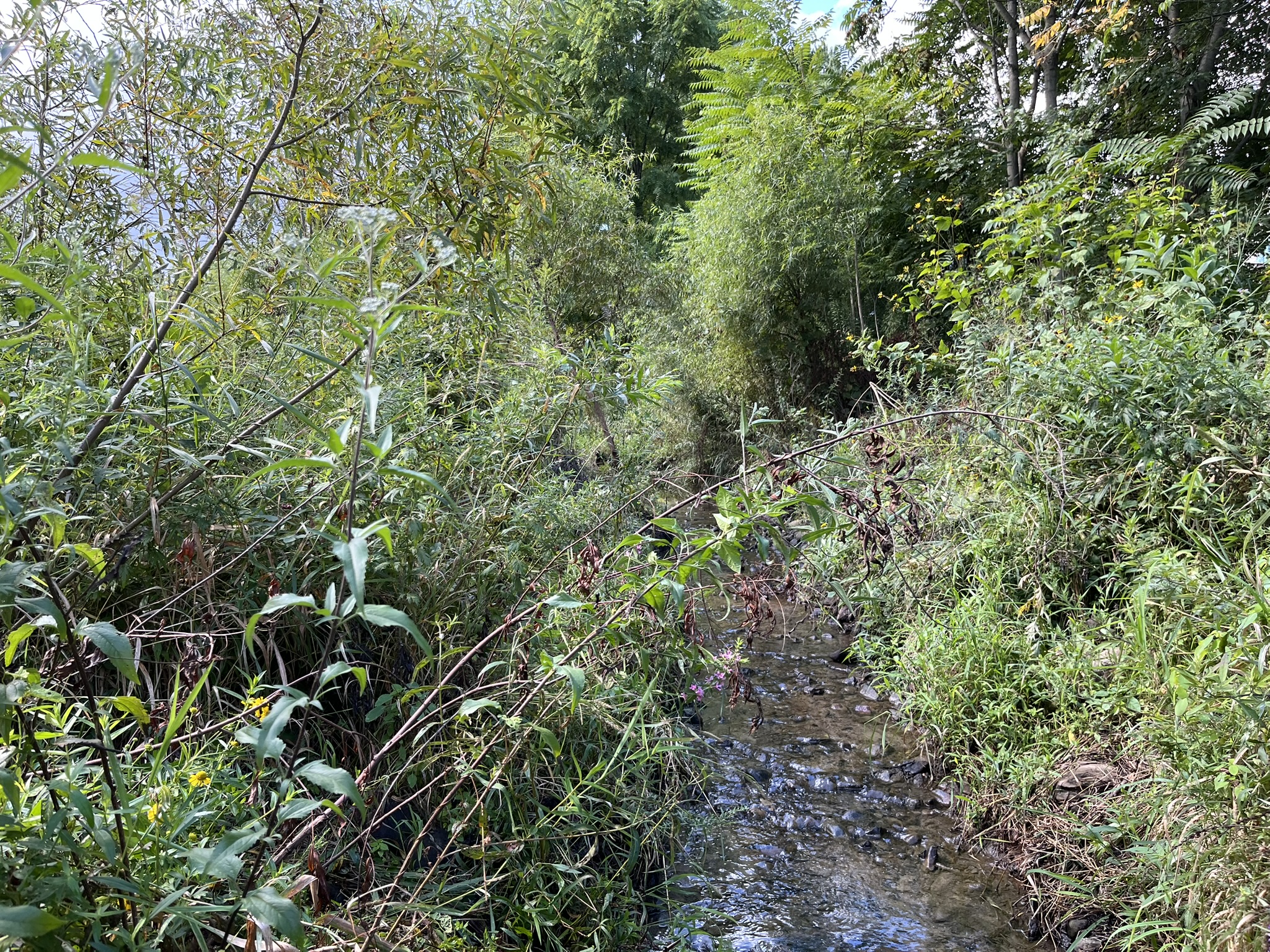
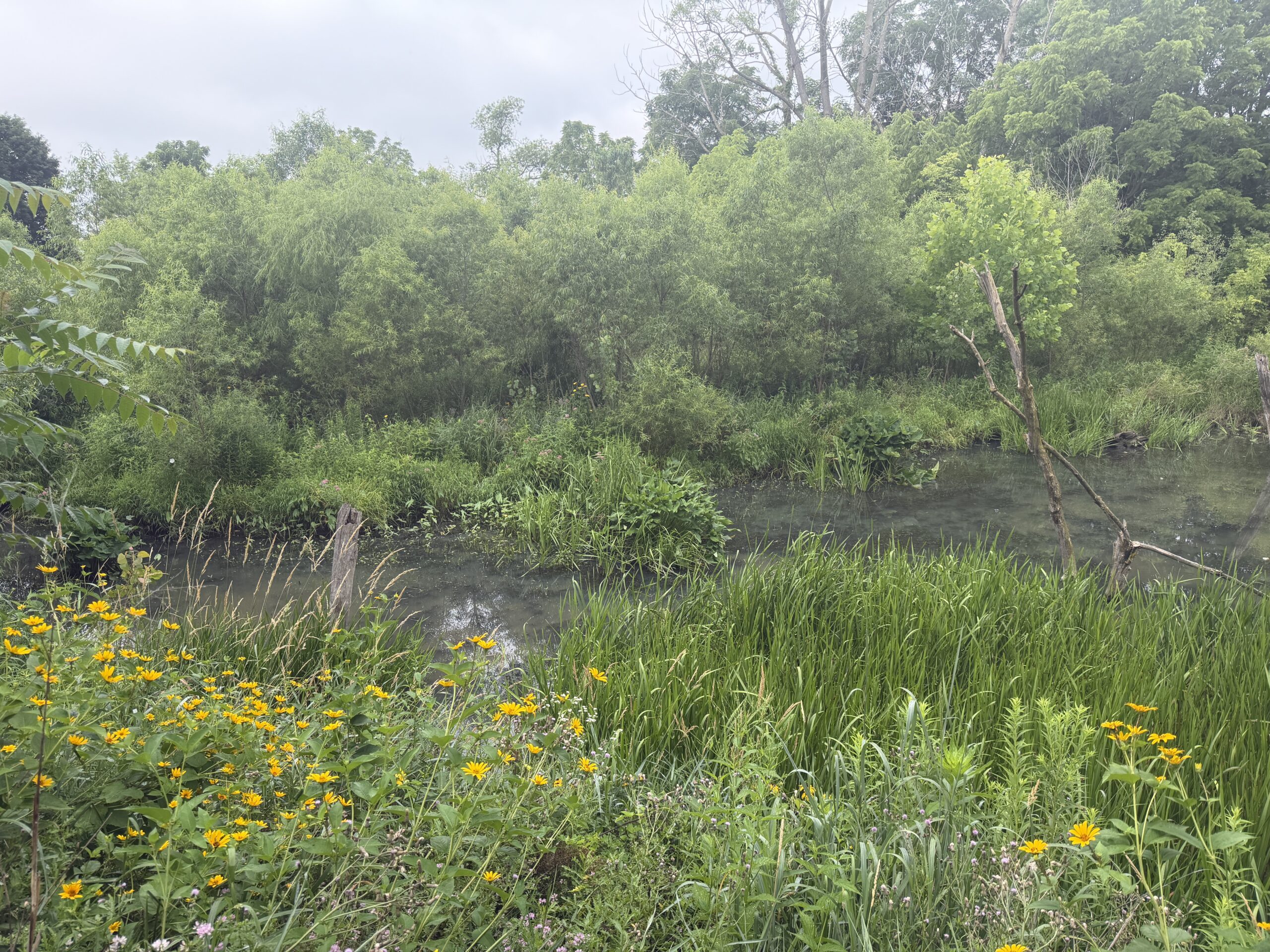
Adams Run stream restoration (top) and forested wetland restoration (bottom) at 5-years post-construction.
EnviroScience, Inc., along with GPD Group and RiverReach Construction, provided design-build, full-delivery mitigation services to the Village of Cuyahoga Heights by working with the Western Reserve Land Conservancy and the City of Akron as site property holders. The EnviroScience team was instrumental in developing the mitigation concept, coordinating with the landowners, and finding a match for the mitigation needs with Cuyahoga Heights. The project mitigates losses to jurisdictional features by restoring 1,574 linear feet of stream, creating 0.7 acres of wetland, and enhancing 0.8 acres of wetland. This project required an FAA permit, which was authorized in early October 2019, since the project resides in the FAA jurisdiction for the Akron Municipal Airport.
Historically, the Adams Run watershed consisted of forested and wetland plant communities. Over the past 100 years, the watershed has been heavily urbanized, resulting in channelization, degradation of the riparian zone, stormwater inputs, and artificial drainage practices. These stressors led to altered stream morphology, poor in-stream habitat, and low biological diversity.
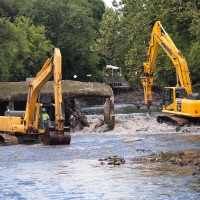
Stream restoration included a raise grade approach, reconnection to the floodplain, and new channel creation. Additionally, the floodplain was expanded, depressional wetlands were restored, the site was revegetated through native seeding and plantings, and invasive vegetation was treated across the site. The newly created floodplain now allows for a more natural meander pattern extending from Triplett Blvd to the Archwood pedestrian bridge and both the restored floodplain and wetlands provide improved flood storage within the site and watershed overall. Monitoring results show that the site is meeting all of its performance criteria and that the restoration is stable. The project is expected to be released from regulatory oversight in 2026 and provided an excellent opportunity to restore an impaired tributary to the Little Cuyahoga River and create much-needed floodplain storage and riparian and habitat improvement.